










Interview with Painture: Perfect Pastry Requires Hard Thinking
Discover Painture, a top Belgian pâtisserie crafting artisan breads and pastries with passion, purity, and precision since 2006.
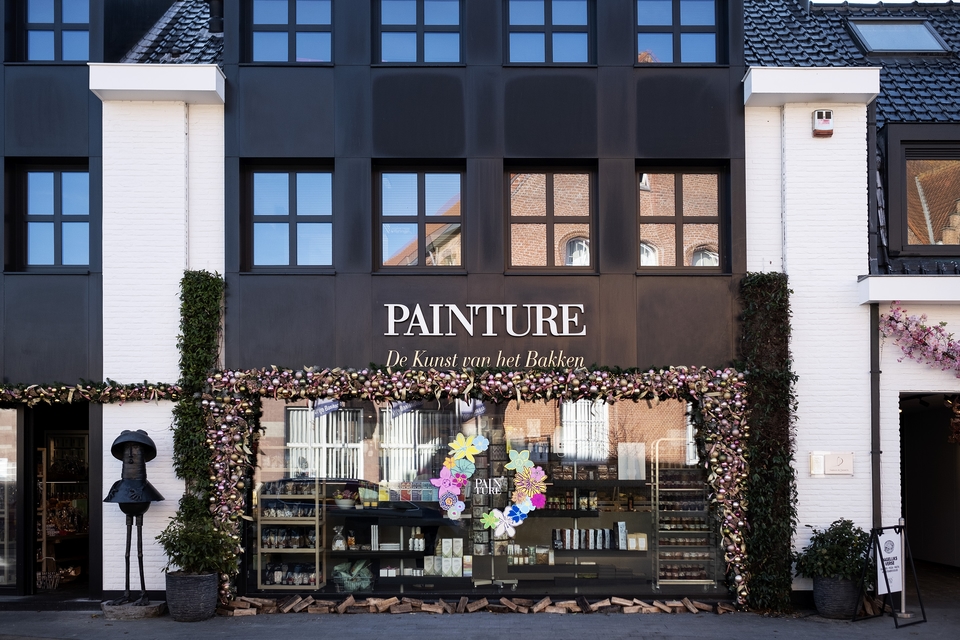
Not far from the picturesque medieval city of Bruges in West Flanders, Belgium, Brecht and Liesbet Van Poucke run Painture, a successful pâtisserie that specializes in artisan breads, cakes, pastries, and biscuits. Since 2006, Painture’s creations have been the delight of customers near and far. With a clear and practical philosophy that strives for excellence from source to final product, Painture has established itself as a standard of quality in the industry. Painture was featured in this magazine ten years ago. It is time to revisit the pâtisserie to see what Painture is up to and to have an in-depth conversation with Brecht about how the company has grown and to see how Painture is responding to developments in the sector.
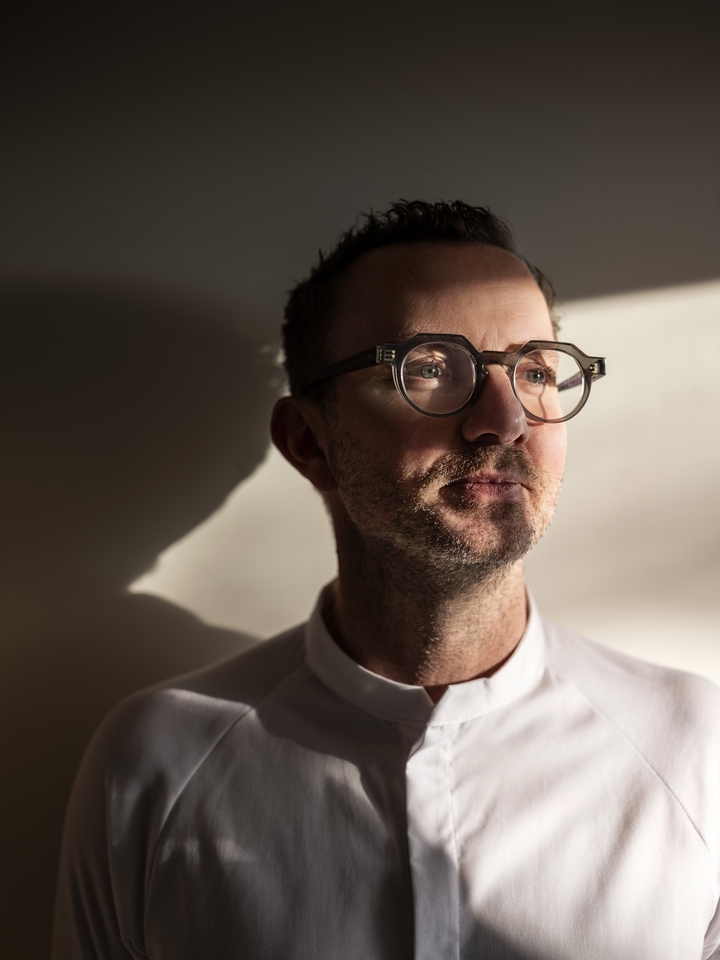
From the outset, it was the intention of the Van Pouckes to have their own business. ‘When Liesbet and I got married, we already knew that we wanted our own food-related company. As a sommelier, Liesbet was keen on a concept that included wine. But hey, she decided to marry a pastry chef, and so we decided on establishing a bakery. At first, we were looking for a place near the coast, but there was no property available, and we also realized that the seasonal dip would be challenging to navigate. Liesbet’s parents knew the owners of a bakery in Oedelem who wanted to sell their bakery. We had no idea how to run our own business, but I knew one thing: I had no interest in running the bakery the way the previous owners did or making products that I didn’t 100% believe in. So, we started with an entirely new assortment.’ Brecht and Liesbet hit the ground running. They opened their new bakery in October 2006 and immediately had to prepare for the Christmas holidays. ‘As it turned out, the response from customers was overwhelmingly positive. A few years later, we moved to our current location at the Bruggestraat. Luckily, we are located on the southern side of the street. Only later did I realize how important it was not having the sun shine into our shop. Otherwise, all the chocolate creations would have melted. We had found the right spot and this is where we still are today.’
The sky is the limit when it comes to creating top-quality pastries.
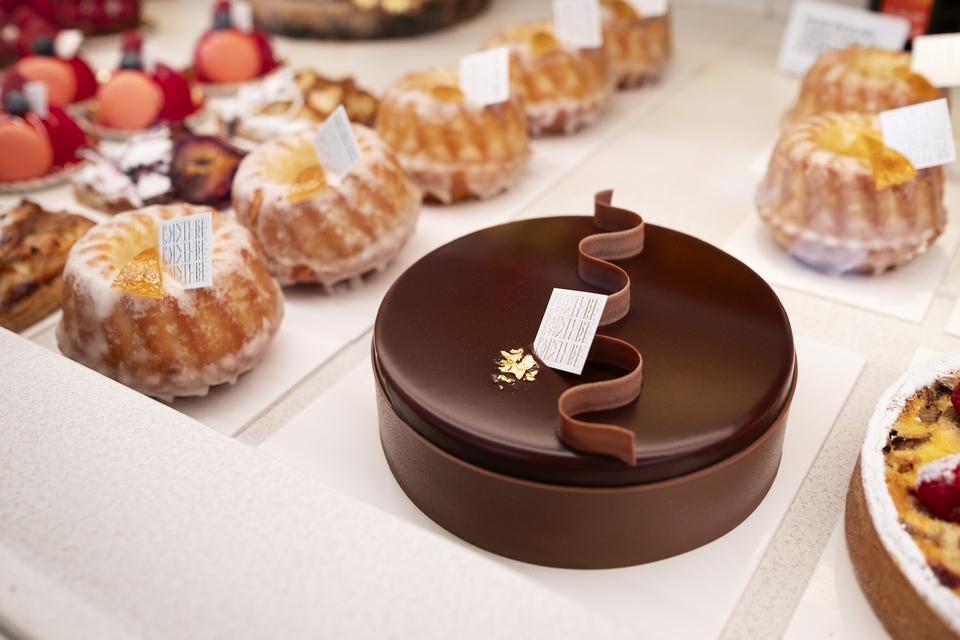
Fifteen years later, Painture has proven to be a success. Growing and maturing means adapting to the developments in the sector. ‘A lot is happening in the world of pastries, these days. The sky is the limit when it comes to creating top-quality pastries. Not just here in Flanders but in all the big cities in Europe. So this is an exciting time. Yet, for all this excitement, I think that we work more – how should I call it – more rationally. That sounds paradoxical, but there’s a lot of hard thinking that goes into perfecting a pastry.’
Together with the professionalisation of the craft, there also appears to be more of a business mindset, says Brecht. ‘Chefs are not only making better creations, they also become better managers of their pâtisseries. I’m calling this the “rational approach”. At the same time, I sometimes wonder what exactly is rational about someone willing to torment himself with owning a pâtisserie,’ laughs Brecht. ‘Seriously though, in the end you end up living for your company, six to seven days per week. There is always something that needs to be done, an errand, a trip to the bank, hunting for a few sought after ingredients. But I wouldn’t have it any other way.’
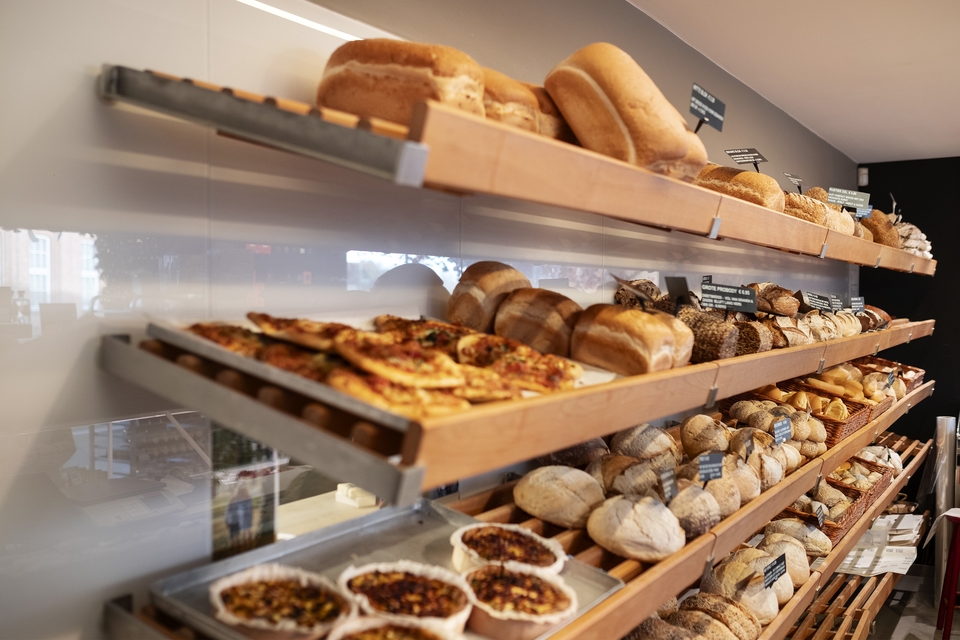
What would you say is typically Painture? Maintaining a certain adaptability that always seeks to do things better is characteristic for Painture and probably the secret to its success. ‘In the past, bakeries and pâtisseries would be isolated from the rest of the world. A baker would typically spend 30 to 40 years doing the same thing. He would make the same excellent products over and over again, but would also make the same mistakes again and again. Today, it is still easy to feel isolated in your bakery, but the world is so much more connected through the media. It is a lot easier to talk to other pastry chefs and learn from each other.’ Brecht believes that this interconnectedness of the world is what has spurred the professionalisation of the craft. ‘Another thing that has changed is that in the past, when a baker worked a lot, he would make a lot of money. Today, when you work a lot, you are either performing too many operations or you are asking the wrong price.
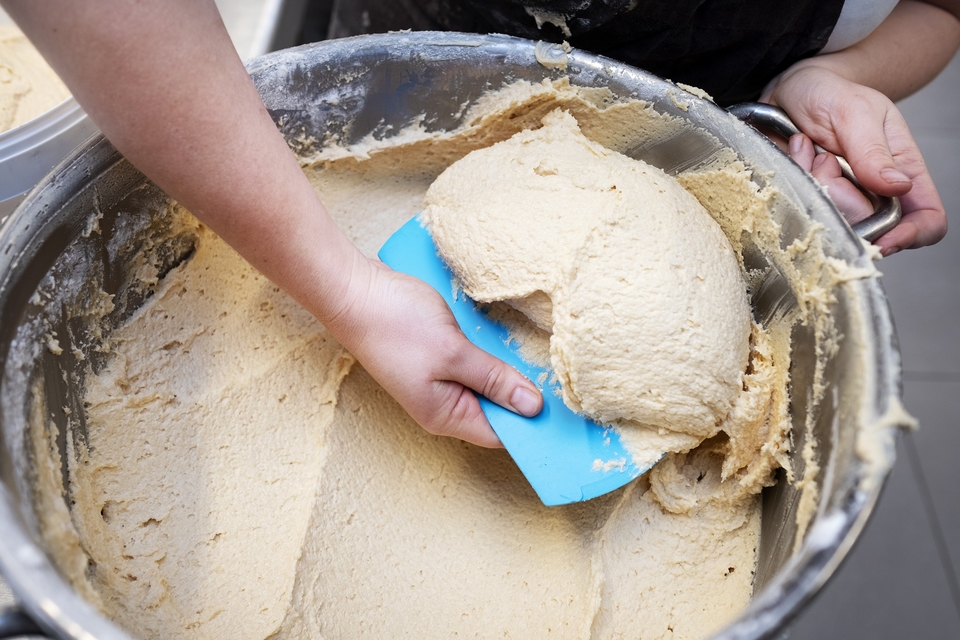
Painture has chosen not to get stuck in doing things a certain way. We have actively sought to improve our products, both in terms of getting the traditional product just right and innovating the craft in ways that appeal to our customers. We are also focused on the purity of our products.’ If he wanted to, Brecht could give all of Painture’s products a biological label. That would probably capture the imagination of many people. ‘For us, however, that is not so relevant. Any of our 35 to 40 breads are biological, especially the French sourdoughs. There is clearly a market for the biological products, and it is growing. But what really matters to us are the original and high-quality ingredients.
Hazelnuts from Piemonte, vanilla from Madagascar, pears from Limburg, local strawberries, and, of course, cream and butter from Debic. We select our ingredients based on origin, quality, as well as fairness. It is important to us that the growers of our ingredients get a fair price. It ensures the availability of these ingredients in the future.’ For Brecht, sustainability and profit are not opposed to each other. They complement each other. ‘We will only be able to continue to make our artisan products and make a decent profit, when what we do is balanced out with a proper concern for the source of the ingredients we use. Our wellbeing depends on the wellbeing of our growers. Put that way, it’s not even a paradox. It shows how interdependent we all are.’
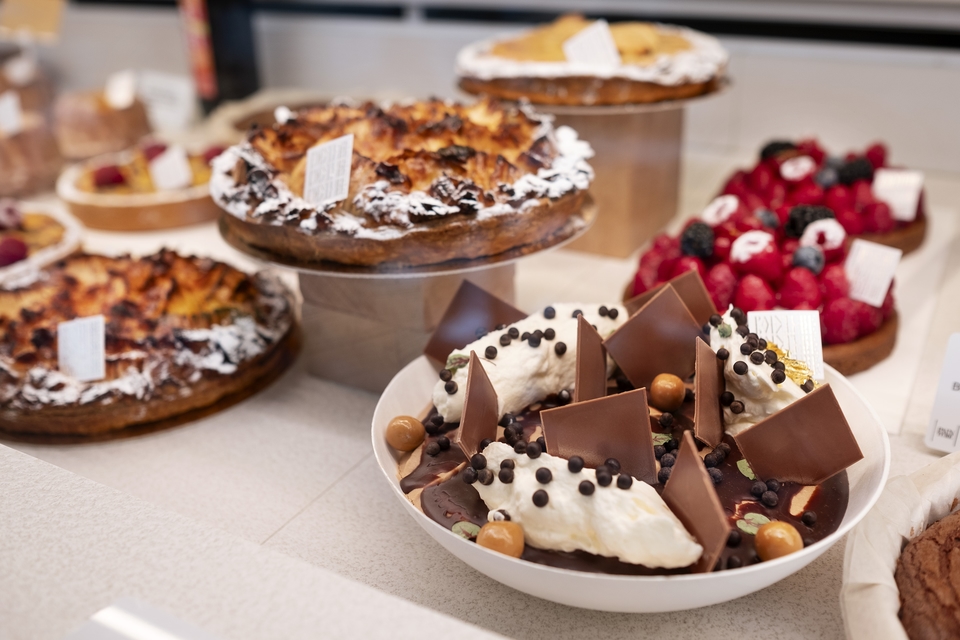
Nowadays, customers are focused on health and have all kinds of demands like products with less sugar or without gluten. How does a pâtisserie like Painture survive when the primary goal of a pastry is to delight with decadent pleasure? ‘It’s fairly simple for me’, says Brecht. ‘I make my products the way I’d like to eat them. For me, that means not worrying about health concerns. That may seem at odds with the demands of my customer base, but look at it like this: A fish and chips shop doesn’t sell light fries, and no one expects them to. People normally do not eat fish and chips every day. That would not be healthy. The same goes for my pâtisserie. My customers do not regard my pastries as daily food. And they’re right, pastries ought to be an occasional delight.
Customers in my shop are deliberately not thinking about their weight or health. They have come to enjoy great pastries.’ For Painture’s daily products, such as its breads, it’s a different story, according to Brecht. Interestingly, breads have become more healthy over time. Painture makes breads free of yeast or gluten. It also carries low-carb breads and breads based on rye, oats and spelt. ‘When it comes to pastries, however, I don’t consider it the pastry baker’s task to be concerned with public health. On the other hand, when a customer asks me to make lactose-free products, I gladly oblige. It’s not that I’m indifferent to requests. I happen to keep the Debic vegantop handy, just in case.’ Lastly, there is also a change in taste among the public, says Brecht. Painture uses less sugar in its whipped cream compared to 15 years ago, and the breads are less salty. ‘However, that has nothing to do with health but taste, even though it’s definitely more healthy to consume less salt and sugar.’
I make my products the way I’d like to eat them.
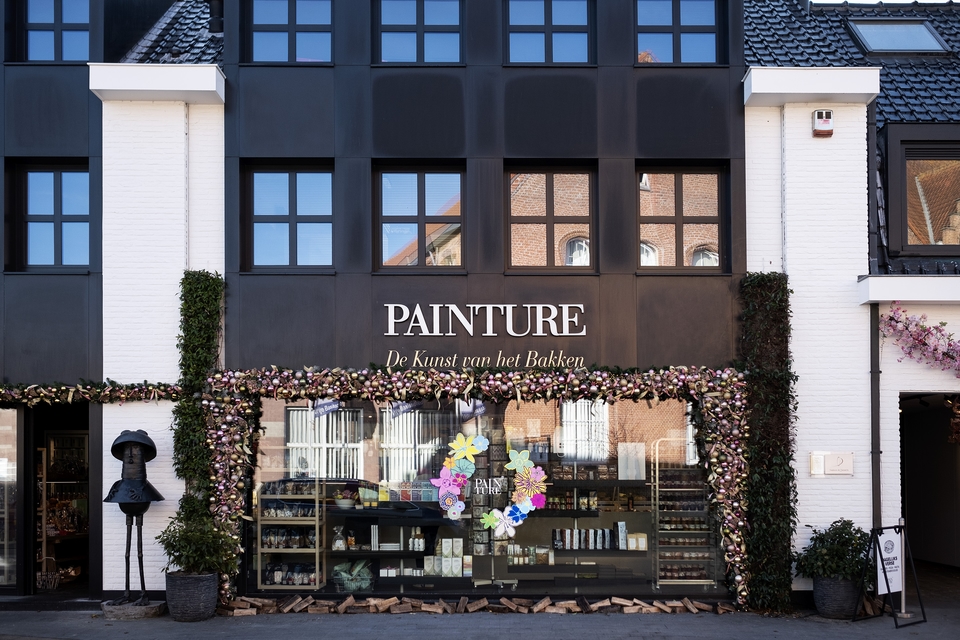
Many people have asked Brecht if Painture will scale up to establish its brand in places like Antwerp and Brussels. ‘We have even received proposals from other parties to do so, but we have refused to go along with the idea. Both Liesbet and I believe that in the end we are the foundation of Painture. We personally need to decide whether a product can be sold or not and how it is made. Commercially, an expansion might work, but our customers would then lose the guarantee that what they buy is in perfect shape. Our bakery is big enough for us and brings enough challenges as it is.
This may not sound like the business attitude required for a bakery such as ours, but when you go out for dinner, would you order two steaks just because you can? No, enough is enough. Proper enjoyment comes in just the right measure. As a pastry chef, I know this like no other and apply that insight to my business. Growing bigger than we are now, might have all sorts of unintended and unwelcome consequences. Currently, we have a fantastic team to work with, and together we make exactly those products that fill us with pride.’

Discover how traditional craftsmanship and modern technique come together in Debic’s feature on Craft Techniques
Discover more